
Essential Packing for Diverse Climates
Packing for a journey that spans both coastal breezes and desert heat requires a strategic approach to layers and materials. The goal is to remain protected from the sun while allowing the body to regulate its temperature through breathable fabrics.
& Sun Protection
Equipment
& Safety Gear
Protection
The shift between arid inland regions and humid coastal zones means the temperature range you encounter in a single day can swing by more than twenty degrees. A traveller into Egypt who prepares for both extremes — not just the midday heat — avoids the most common physical discomforts reported by visitors: sunburn, dehydration, chapped lips, and blistered feet. Every item on this list earned its place because it addresses a specific environmental stressor you will meet on the ground.
- ◆Coastal humidity to interior dry heat
- ◆Daytime highs, nighttime temperature drops
- ◆Sand, dust, and wind exposure
- ◆Sun protection across all regions
Clothing for Sun Protection
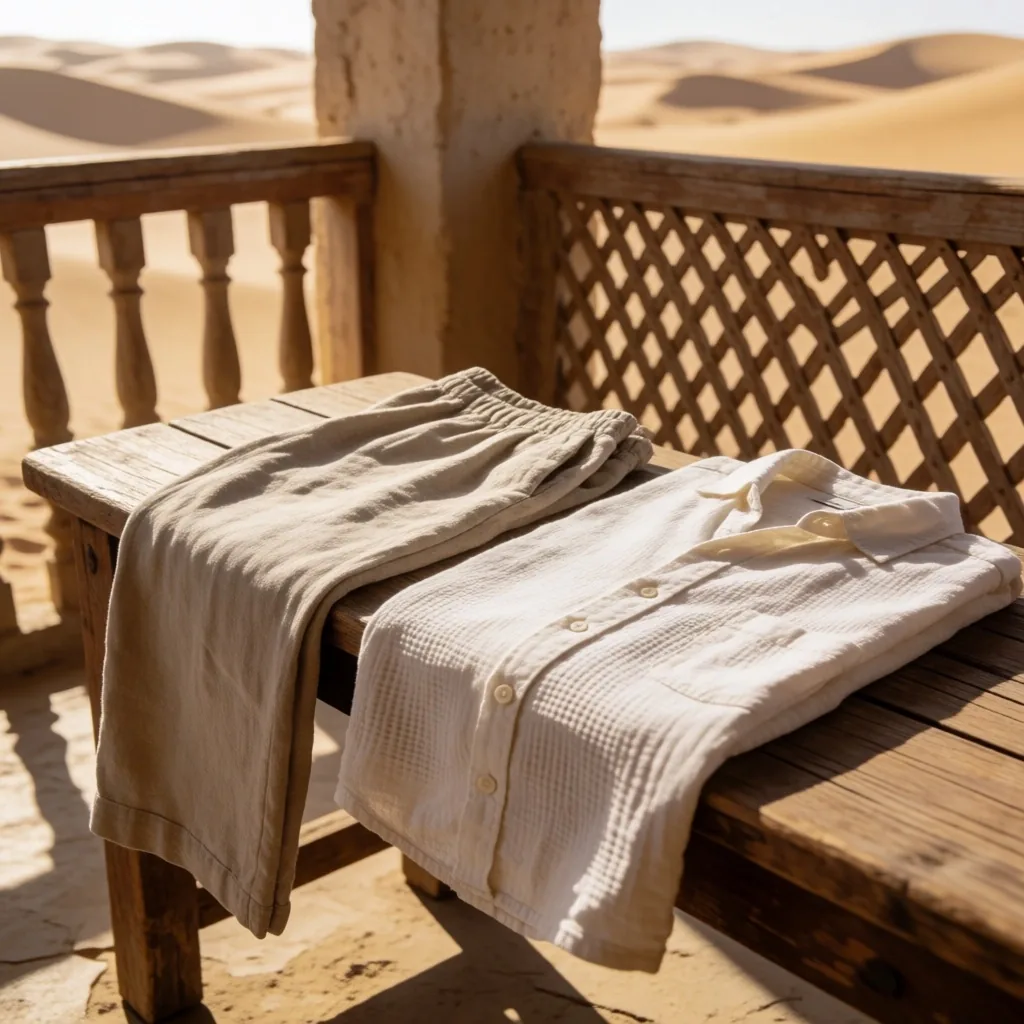
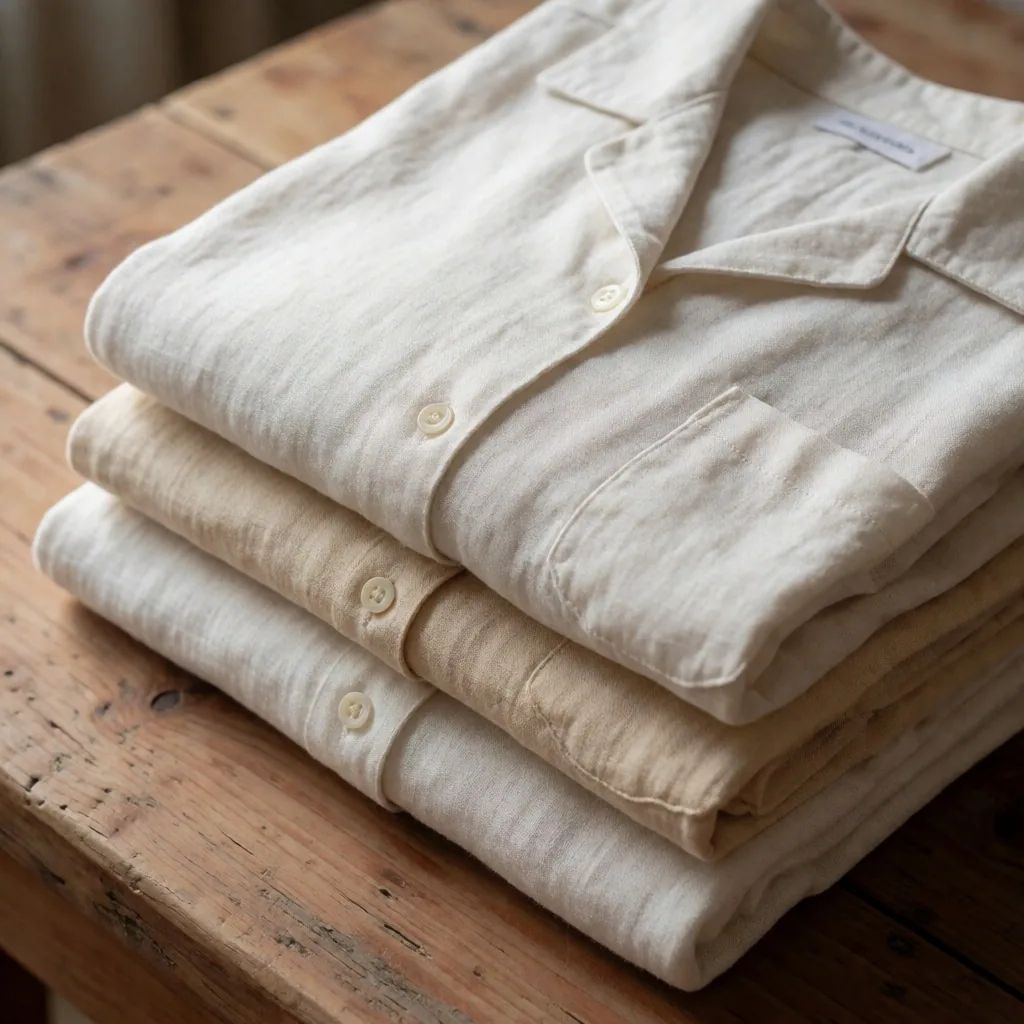
Light-colored, loose-fitting clothing made from natural fibers like cotton or linen is the standard for desert environments. These fabrics allow air to circulate around the body while providing a physical barrier against UV radiation. Long sleeves and trousers are recommended to protect the skin from both the sun and wind-blown sand.
Avoiding dark colors is practical, as they absorb more heat and can lead to rapid overheating during midday hours. The logic is simple: a black shirt in direct sun becomes a heat sink against your skin, while a white or pale linen shirt reflects radiation and lets the breeze reach your body through the weave of the fabric.
Choose garments you can layer. A long-sleeve shirt you can roll up to the elbows gives you flexibility between full sun exposure and shaded rest. Trousers that convert to shorts handle the transition from rocky interior paths to the coastal boardwalk without needing a full change of clothing.
Footwear for Varying Terrains
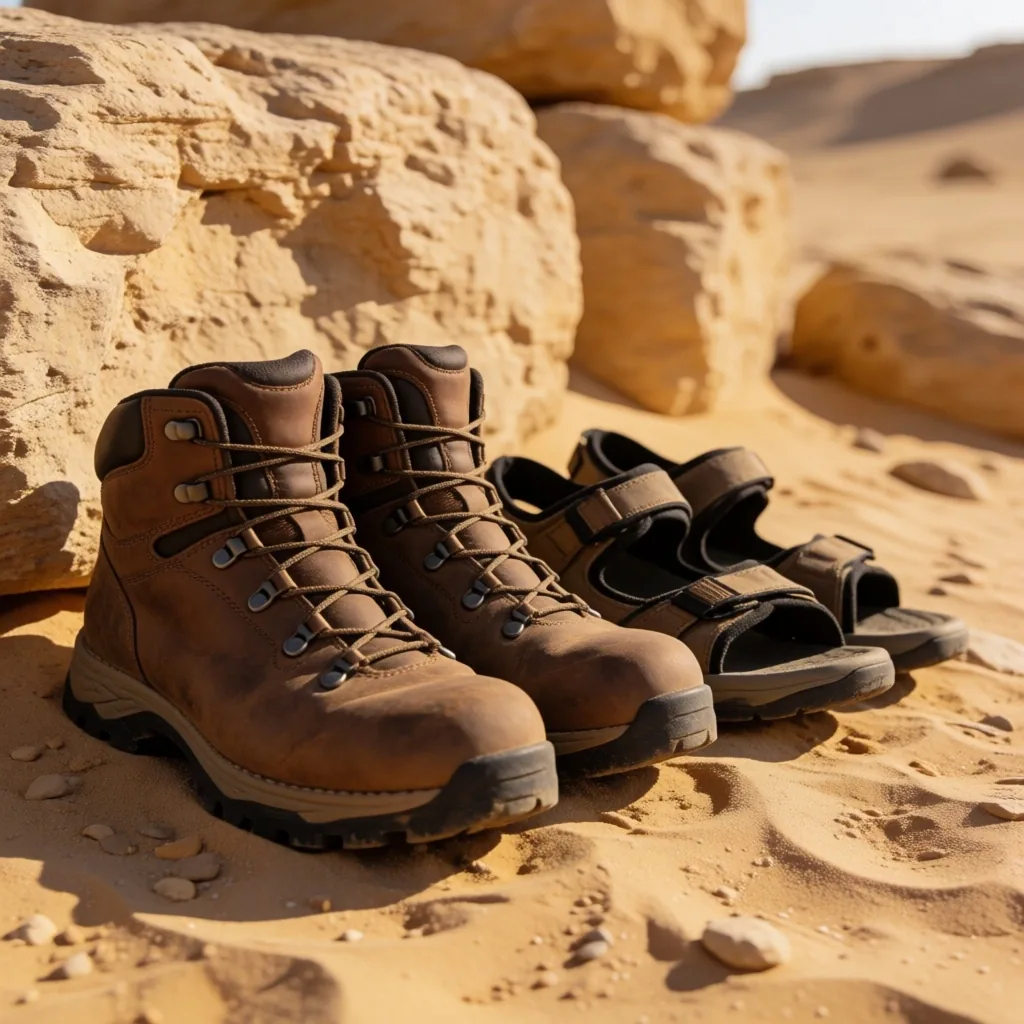
The choice of footwear depends heavily on the specific landscape being explored. For the sandy interior, closed-toe boots with good ankle support are essential to prevent burns from hot sand and to navigate uneven rock formations. On the coast, sturdy sandals with grip are useful for walking on docks or near tide pools.
It is important to break in new footwear before the journey to avoid blisters, which can become significant issues in a hot climate. A blister that would be a minor annoyance in a temperate zone can turn into a serious problem when combined with heat, dust, and constant walking — the kind of problem that ends a day of exploration early.
Headgear and Eye Protection
A wide-brim hat is a non-negotiable item for any traveller into Egypt, providing shade for the face, neck, and ears. This should be paired with high-quality sunglasses that offer full UV protection to prevent eye strain and long-term damage from the intense glare. In the desert, a lightweight scarf or shemagh can also be used to protect the lower face from dust and wind.
These items are the first line of defense against the most immediate environmental stressors. The sun here is not the gentle warmth of a northern summer — it is a constant, direct force that taxes the body from above and reflects back up from sand and pale stone. Protecting the head and eyes is not optional comfort; it is the baseline for functioning outdoors.
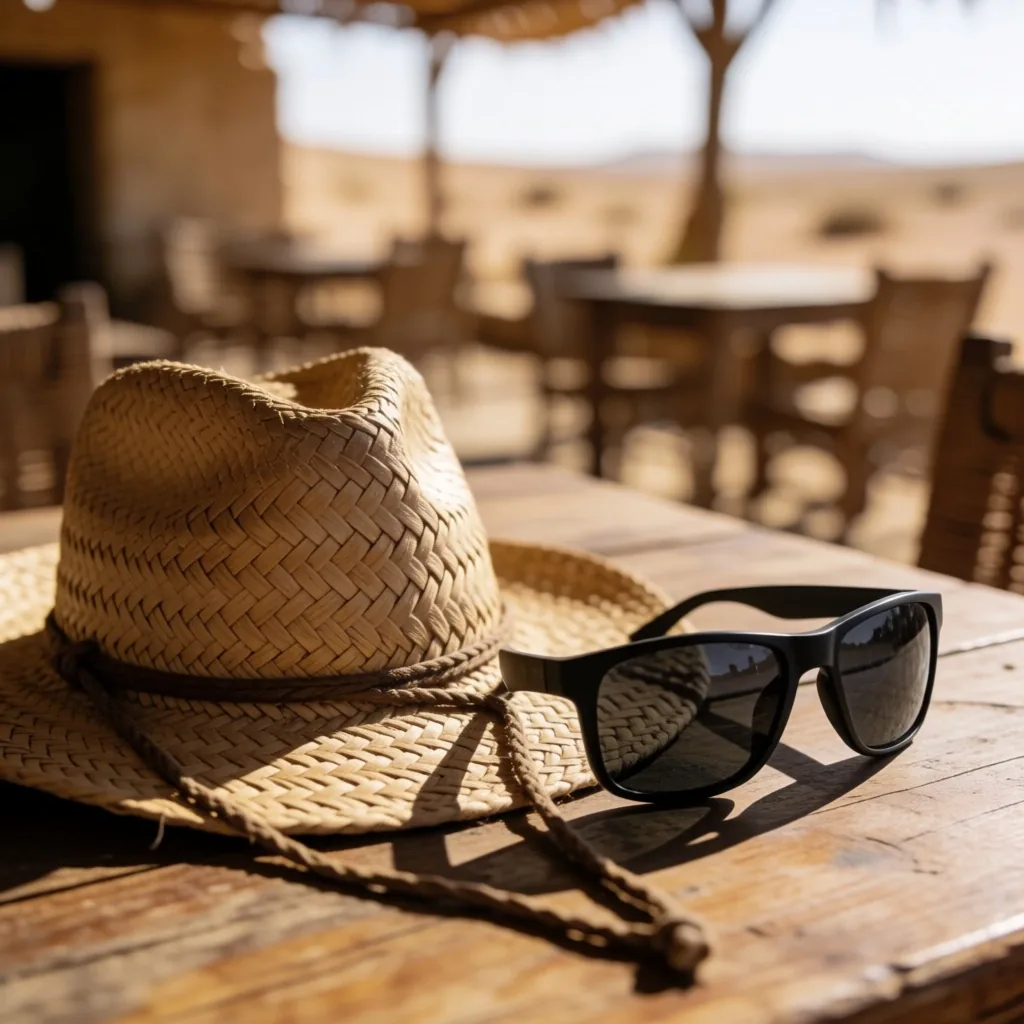
- □Wide-brim hat — covers face, neck, ears
- □Sunglasses — full UV protection, polarized
- □Lightweight scarf or shemagh — dust and wind barrier
- □Chin strap or cord for hat in windy conditions
Essential Hydration Equipment
Carrying a sufficient supply of water is the most critical safety requirement in an arid climate. Insulated water bottles or hydration bladders help keep liquids at a manageable temperature and encourage frequent sipping. It is recommended to have a capacity of at least 3–4 liters per person for any excursion away from established water sources.
Monitoring your water supply throughout the day ensures that you never find yourself in a state of dehydration. The mistake inexperienced travellers make is drinking only when thirsty — by the time thirst registers, the body is already behind. Sip consistently, rest in shade during the hottest midday hours, and treat water as the single most important item in your pack.
Bladder
or Bottle
- 01Sip consistently through the day — do not wait for thirst
- 02Rest in shade during peak midday heat
- 03Carry electrolyte or rehydration salts separately
- 04Mark your supply so you know what remains at any point
Skin Care and First Aid
Sunscreen with a high SPF rating must be applied liberally and frequently, even on cloudy days, to prevent severe burns. A basic first aid kit should include adhesive bandages, antiseptic wipes, and rehydration salts to address minor injuries or heat exhaustion. Lip balm with sun protection and moisturizing lotions help combat the drying effects of the desert air.
Having these items easily accessible can prevent small health concerns from escalating. Keep the first aid kit near the top of your pack, not buried at the bottom — you will not want to unpack everything to reach a bandage when you need one.
- ◆High-SPF sunscreen
- ◆Adhesive bandages
- ◆Antiseptic wipes
- ◆Rehydration salts
- ◆SPF lip balm
- ◆Moisturizing lotion
Nighttime Insulation
While daytime temperatures are high, the desert cools down significantly after sunset, often requiring extra layers. A lightweight fleece or a windbreaker is usually sufficient to handle the evening chill in the interior regions. For those spending time in the mountains or coastal areas during the winter, a heavier jacket may be necessary.
Being prepared for these temperature swings is a sign of an experienced traveller into Egypt. The same sun that burns at noon can leave you shivering by nine in the evening once the sand releases its stored heat back into the open sky. Pack one warm layer even if the forecast only mentions heat.
- InteriorLightweight fleece or windbreaker
- MountainHeavier jacket, thermal base layer
- Coast WinterMid-weight jacket, wind resistance
Navigation and Communication Tools
Even if staying on marked paths, having a physical map and a reliable compass is a wise backup to digital devices. Solar chargers or portable power banks are useful for keeping communication tools functional in areas without electricity. A whistle and a small mirror can serve as emergency signaling devices if you become separated from your group.
These tools are lightweight but provide a significant safety net during remote exploration. Phone batteries drain faster in heat, GPS signal can drop in canyons, and a screen that cracks on a rock leaves you with nothing if you relied on it entirely. Paper and magnetic compass do not break, do not run out of power, and work in any temperature.
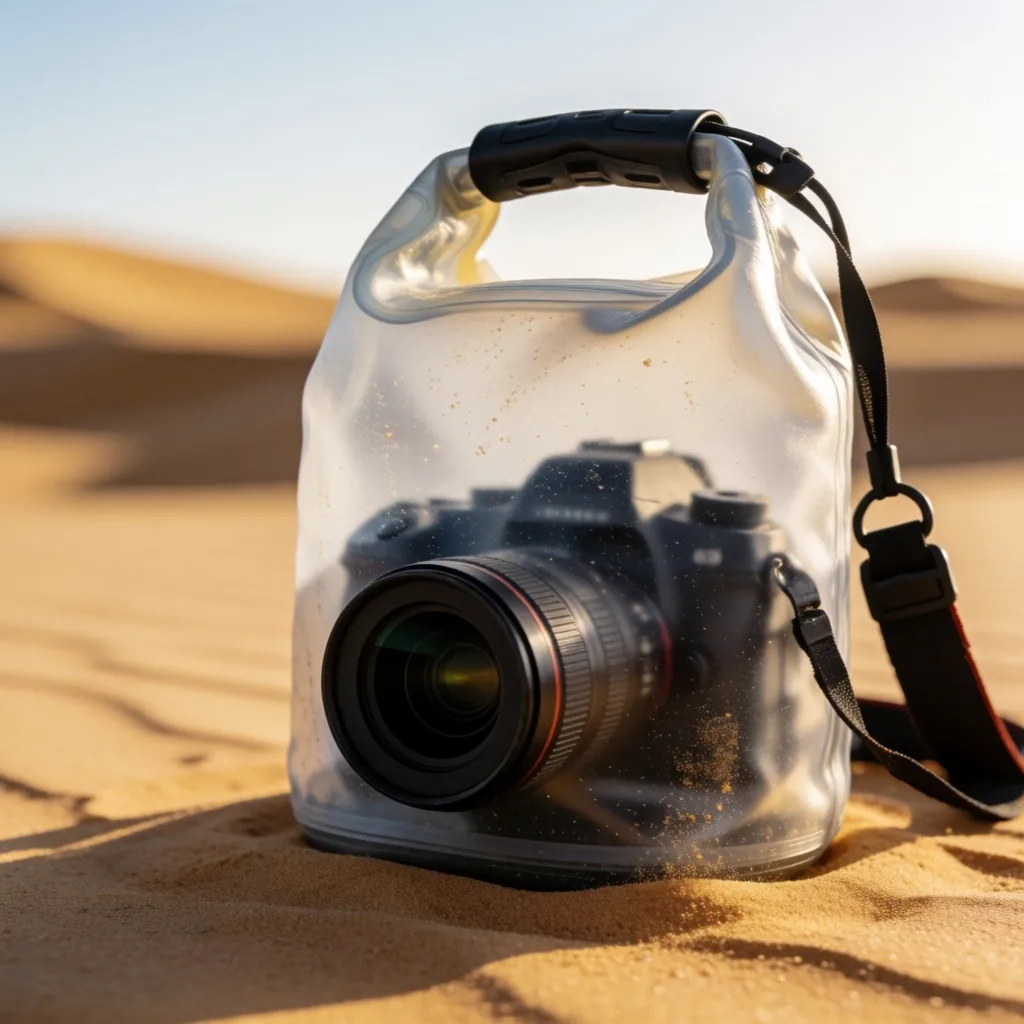
Gear for Sand and Dust Protection
Fine sand particles can easily penetrate electronics and bags, causing damage or mechanical failure. Using dry bags or sealed plastic pouches for cameras and phones is a practical way to extend the life of your equipment. A small brush or microfiber cloth is handy for cleaning lenses and sensors after a day in the wind. Protecting your gear is just as important as protecting yourself in the desert environment.
Sand finds its way into zippers, button gaps, lens mechanisms, and charging ports. Once inside, it grinds against moving parts with every use. The cost of prevention — a handful of sealed bags and a cleaning cloth — is small. The cost of a ruined camera or phone mid-journey is significant.
Lightweight Backpacks and Storage
A well-ventilated backpack with padded straps makes carrying your essentials much more comfortable over long distances. Look for designs that allow for easy access to water and sun protection without having to unpack the entire bag. Distributing weight evenly and using waist straps can reduce fatigue on the back and shoulders.
A properly fitted bag is essential for maintaining mobility in rugged terrains. The pack should sit against your back without swinging, and the hip belt should carry most of the load — your shoulders are stabilizers, not the primary support. Test the loaded pack before departure: a bag that feels fine empty can become painful after three hours of walking in heat.
- VentilationMesh back panel to reduce sweat buildup
- AccessSide pockets for water, top-loading for main compartment
- StrapsPadded shoulder straps plus waist belt
- FitTested loaded — not just empty in a store
Personal Identification and Documentation
Keeping copies of your identification and any necessary travel documents in a waterproof pouch is a basic safety measure. It is also helpful to have a list of emergency contacts and any relevant medical information written down.
Storing these in a separate location from the originals ensures that you have access to information even if a bag is lost. Organization in this area reduces stress and facilitates smoother interactions with local authorities if needed.
- □Originals in one waterproof pouch
- □Copies in a second pouch, separate bag
- □Emergency contacts list — written on paper
- □Medical information — allergies, conditions
Complete Packing List
Every item from the ten sections above, collected in one place. Print it, check each box before departure, and carry it with the bag itself.
- □Light cotton / linen shirts (long sleeve)
- □Loose trousers (convertible preferred)
- □Lightweight fleece or windbreaker
- □Heavier jacket (winter mountain / coast)
- □Underlayers — breathable, quick-dry
- □Socks — natural fiber, multiple pairs
- □Wide-brim hat with chin strap
- □UV-protection sunglasses (polarized)
- □Lightweight scarf / shemagh
- □Closed-toe boots (broken in)
- □Sturdy sandals with grip
- □Camp slip-ons for evening
- □Insulated bottles / hydration bladder (3–4L)
- □High-SPF sunscreen
- □SPF lip balm
- □First aid kit (bandages, wipes, antiseptic)
- □Rehydration salts
- □Moisturizing lotion
- □Physical map of the region
- □Compass
- □Power bank / solar charger
- □Whistle and signal mirror
- □Dry bags / sealed pouches
- □Microfiber cloth and small brush
- □Document copies in waterproof pouch
- □Emergency contacts on paper
Questions about regional gear?
If a specific item on this list needs clarification — how it performs in a particular region, what materials work best, or how to adapt the list for a longer journey — reach out. The Desert & Coast Guide team is available to expand on any section with regional specificity.