
Reference Desk / Volume 04

Frequently Asked Questions

Exploring a new region often brings up a variety of logistical and cultural questions. This section addresses the most common inquiries we receive from travellers preparing for their journey. We focus on clear, factual answers to help you plan with confidence. If your question is not covered here, reach out to our editorial team through the contact page.

Stub 01

Climate & Timing

When the desert cools and how to dress for both environments.

Stub 02

Daily Logistics

Water, connectivity, tipping, and getting around remote zones.

Stub 03

Customs & Respect

Religious sites, local language basics, and social etiquette.

Index

Eight Topics

Scroll for detailed answers below, or contact our team directly.

Section A

Climate & Daily Environment

Practical answers about timing, hydration, and dressing for two very different settings within the same day.

Q.01

What is the best time of year to visit the desert?

The most comfortable period for desert exploration runs from November to February, when daytime temperatures are mild enough for long stretches of outdoor activity without the risk of heat exhaustion. Nights during these months drop sharply, as the desert does not retain heat after sunset, so pack an insulating layer even if the daytime feels warm. Shoulder weeks in October and March can also work, but carry more water and plan walks for early morning. For any traveller into Egypt unfamiliar with arid climates, the winter window is the safest reference point for itinerary planning.
Q.02

Is the water safe to drink from the tap?

In most parts of the region, bottled or filtered water is recommended over tap water for drinking. Tap water is generally fine for washing and showering, but the mineral content and treatment methods can cause digestive upset for those not accustomed to it. Bottled water is widely available in towns and at most rest stops along major routes. If you are heading into remote areas, carry enough sealed bottles for the full stretch, as supply lines thin out quickly beyond established settlements.

Q.03

How should I dress for a day in the city vs. the desert?

In both environments, modesty and sun protection are the key considerations. In the city, loose-fitting clothing that covers the shoulders and knees is the respectful standard. In the desert, the focus shifts toward protection from solar radiation and wind, making long sleeves and trousers in breathable natural fabrics the best choice. A wide-brimmed hat, a cotton scarf for the neck, and closed footwear with good grip serve well across both settings. Avoid synthetic fabrics in the desert — they trap heat and can irritate skin during long exposure to dry air.

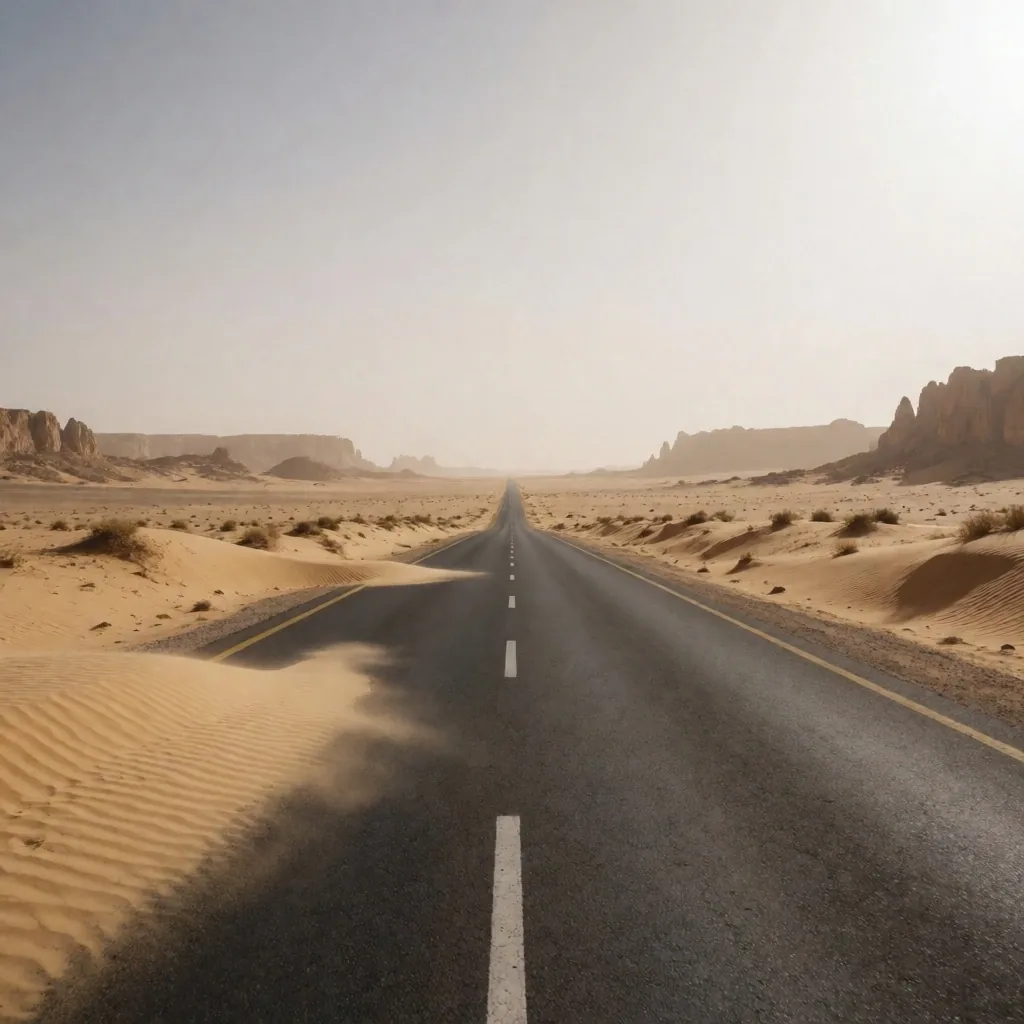
Desert highway under hazy sky

Field Note

Desert conditions change faster than most travellers expect. A calm morning can shift to strong winds by early afternoon, and visibility may drop to a few metres within minutes. The answers below address what to do when that happens — along with how to stay connected, navigate cultural norms, and handle the small exchanges that shape daily movement through the region.

Section B

Movement & Connectivity

Language, mobile coverage, and weather events that can affect your route through remote terrain.

Q.04

Do I need to learn the local language to get around?

Many people in coastal areas and major cities speak some English, so day-to-day navigation is manageable without fluency. Still, learning a few basic greetings and numbers in the local dialect is highly recommended. It shows respect for the culture and is genuinely useful in markets, smaller villages, and shared taxis where English is less common. Most signage in transit areas appears in both the local script and Latin characters, so reading directions is rarely a barrier. Even ten words — hello, thank you, yes, no, and the numbers one through five — will noticeably smooth your interactions.

Q.05

How do I stay connected in remote areas?

Mobile coverage is generally excellent in cities and along major highways, but it thins out in the deep desert and remote mountain ranges. If you are planning to spend time away from established towns, carry a satellite communication device or at minimum a solar charger for your phone, and download offline maps before setting out. Always share your intended route and expected return time with someone before entering areas with limited connectivity. A fully charged power bank is the minimum baseline — phone batteries drain faster in extreme temperatures, and a dead device in a dead zone is a situation best avoided.

Q.06

What should I do if I get caught in a sandstorm?

If you are driving, pull over to a safe location away from the road, turn off your engine, and wait for the storm to pass — continuing in near-zero visibility is dangerous. If you are on foot, seek shelter behind a solid structure, cover your face with a scarf, and stay low to the ground to avoid the heaviest concentration of blowing sand. Protect your eyes and keep your mouth and nose covered with a damp cloth if possible. These storms are usually temporary, and visibility will return once the wind dies down. Avoid navigating during the peak of the event — patience is the correct response.

Section C

Customs & Social Norms

Religious site etiquette and the small exchanges that shape daily interactions — including the local practice of tipping for everyday services.

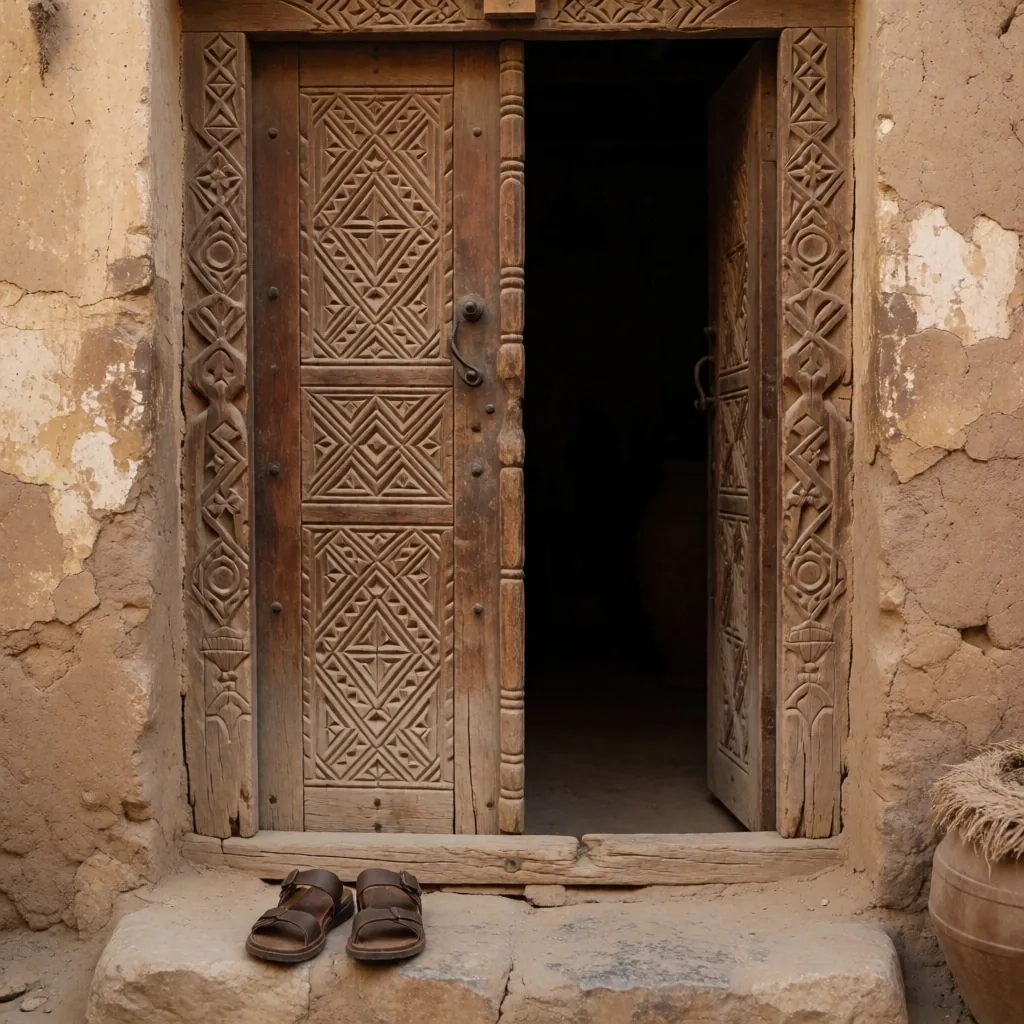
Carved wooden doorway with sandals at entrance
Q.07

Are there specific rules for visiting religious sites?

Yes. When entering a mosque or other religious site, it is expected that you remove your shoes and wear conservative clothing. Women are often asked to cover their hair with a scarf, which is usually provided at the entrance if you do not have one. Maintain a quiet, respectful demeanor throughout your time inside, and avoid taking photographs during prayer times. If you are unsure whether photography is permitted at a given moment, ask before raising your camera. Most sites welcome considerate visitors — the key is to follow the lead of those around you and treat the space as shared rather than purely scenic.

Q.08

How does tipping work in daily interactions?

Small tips — known locally as baksheesh — are a common part of the economy and are appreciated for everyday services like bag carrying, parking assistance, restroom attendance, or brief guided explanations. There is no fixed amount; a modest token of gratitude is the standard. It helps to keep small denominations of local currency easily accessible, since finding change for a large note in informal situations is difficult. Tipping is not mandatory, but it is expected in the same way that rounding up is expected in many service contexts. Carry a pocketful of small notes at the start of each day and the rhythm becomes second nature.

Quick Reference

Key Takeaways at a Glance

Topic

What to Know

What to Carry or Do

Desert Timing

November to February is mildest; nights drop sharply.

Insulating layer, extra water on shoulder-season walks.

Drinking Water

Bottled or filtered water is the safe standard.

Stock sealed bottles before heading into remote zones.

Connectivity

Coverage thins beyond towns and major highways.

Solar charger, offline maps, share your route in advance.

Religious Sites

Remove shoes, dress conservatively, stay quiet during prayer.

A scarf for hair covering; ask before photographing.

Tipping

Small amounts for everyday services are standard.

Keep small denominations within easy reach daily.

Still have a question?

Contact Our Editorial Team

If your question is not covered above, write to us directly. We respond to traveller inquiries about regional logistics, climate preparation, and cultural norms.

Contact Editorial Team

Explore further

Browse All Travel Guides

Our egypt travelling guides cover packing essentials, climate windows, coastal landscapes, and desert exploration in detail. Each guide is written for independent travellers planning their own route.

View All Guides

For deeper detail on climate windows and seasonal patterns, see our logistics data section.

Read Logistics Data